






Shiksha Evam Khelkud Samiti

Digantar (full name Digantar Shiksha Evam Khelkud Samiti) is registered under the Rajasthan Societies Registration Act 1958 to work in the field of education. Its main campus and office are situated at Todi Ramjanipura, Jagatpura, Jaipur – 302017. Digantar’s primary focus is delivering free and good quality elementary education with a focus on underprivileged children.

Motto

JUSTICE & EQUALITY through providing educational opportunities for all and particularly for the marginalised and those with the least resources.

Our Vision

Digantar sees education as nurturing each person’s potential and dignity to build an inclusive, democratic society of equal and active participants.

Mission

Digantar advances equitable, high-quality education, especially for marginalized groups, through schools, training, research, and educational materials

Programs

School

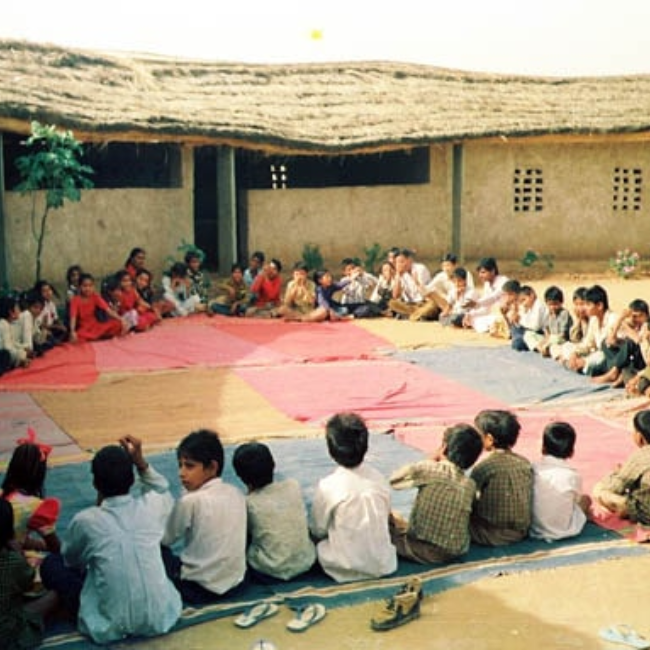
Digantar Vidyalaya is a natural and spontaneous development out of a small school started in 1978 in Jaipur at C-Scheme on the basis of pedagogy of Neel bagh School started by David Horsburgh in Kolar district of Karnataka. Two of the first teachers were sent to Neel bagh for training.The school in Jaipur, initially accommodated approximately twenty to twenty-five children of different age groups and diverse social backgrounds.

TARU

Since its establishment, Digantar has aspired to become an organization dedicated to enriching the quality of education for all children by developing a strong knowledge base. The Academic Resource Unit (TARU) was created in 1995-96 in response to the need for providing academic guidance to extension programmes Digantar had taken with Lok Jumbish, Rajiv Gandhi Shiksha Mission Bhopal, and some other organisation.

Publications

'Shiksha Vimarsh ’(Education Discourse) is a Hindi magazine published by Digantar since 1998. It started in response to the absence of a serious magazine dedicated to educational issues in Hindi.It seeks to inform and engage its reader in discourse on a wide spectrum of issues related to contemporary educational thought and practice, policies, problems, case studies, researches and book reviews.

About Digantar

Digantar began in Jaipur with a small group of children and teachers inspired by the educational vision of David Horsburgh of Neel Bagh. Horsburgh believed that India’s greatest loss was the lack of quality education for rural children. His school at Neel Bagh demonstrated how joyful, holistic learning—combining academics with arts, crafts, and practical skills—could transform children’s lives.

Rooted in this philosophy, Digantar promotes fear-free, self-paced, and concept-based learning that nurtures independent and motivated learners. Since relocating to rural Jaipur in 1986, Digantar has expanded its work through its school, teacher training and curriculum development (TARU), and educational publishing, impacting classrooms and educators across India.

Our History

Through early work with disadvantaged communities and partner organisations, Digantar developed a strong commitment to democratic values, reason, and meaningful education.

In 1986, Digantar relocated to rural Jaipur to focus on out-of-school children, especially girls. Its work grew into three areas: Digantar Vidyalaya (the school), TARU (teacher training and curriculum development), and publishing educational books and the Hindi journal Shiksha Vimarsh. These efforts have shaped Digantar’s work for over three decades.

Our Work

Through early work with disadvantaged communities and partner organisations, Digantar developed a strong commitment to democratic values, reason, and meaningful education.

In 1986, Digantar relocated to rural Jaipur to focus on out-of-school children, especially girls. Its work grew into three areas: Digantar Vidyalaya (the school), TARU (teacher training and curriculum development), and publishing educational books and the Hindi journal Shiksha Vimarsh. These efforts have shaped Digantar’s work for over three decades.

Our Philosophy

Through early work with disadvantaged communities and partner organisations, Digantar developed a strong commitment to democratic values, reason, and meaningful education.

In 1986, Digantar relocated to rural Jaipur to focus on out-of-school children, especially girls. Its work grew into three areas: Digantar Vidyalaya (the school), TARU (teacher training and curriculum development), and publishing educational books and the Hindi journal Shiksha Vimarsh. These efforts have shaped Digantar’s work for over three decades.

Leadership Team

General Body

Rajesh Kumar Director
Pragya Shrivastava Principal
Hari Narayan Karol Chief Accountant
Noratmal Pareek Community Coordinator, Vidyalaya
Hemant Kumar Sharma Academic Coordinator, Vidyalaya
Mahesh Sharma Academic Coordinator, Vidyalaya

Executive Committee

Core Group

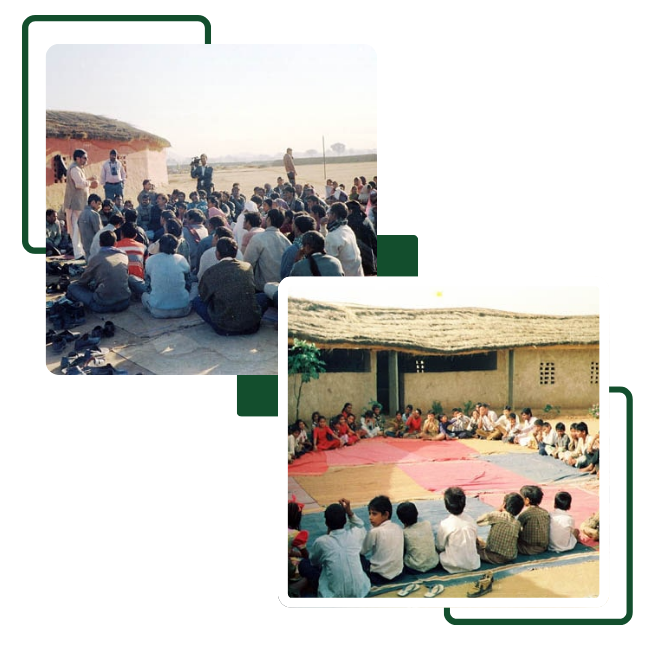
Digantar started in a privately owned garden in Jaipur, Rajasthan with seven children and two teachers inspired and trained by David Horsburgh of Neel Bagh, Karnataka. David Horsburgh liked India and was a passionate educationalist, learned in Sanskrit and Pali, believed that India’s development was severely limited on account of the vast numbers of rural children who had no access to a good education. Mr. Horsburgh would say that the real brain drain in India was not the many experts who had left India to work overseas, but the thousands and thousands of children who had no educational opportunities. He started Neelbagh as an example and living testing ground of good education, a small free school in rural Karnataka to demonstrate the transformative potential of high-quality learning. To run a school exactly as per his vision of education and to serve the poorest of the poor, he financed his schools through textbooks he wrote for the Indian context. The children who attended Neelbagh would otherwise have spent their formative years helping their parents eke out a marginal farming livelihood. At Neelbagh, children learned not only the classic school subjects of Science, Maths, English, Sanskrit, Hindi, plus Kannada and Telegu, they also learned pottery, singing, gardening, sewing, carpentry, art, philosophy, and poetry. School life was a hub of activity, fun, enthusiasm, and continuous learning.
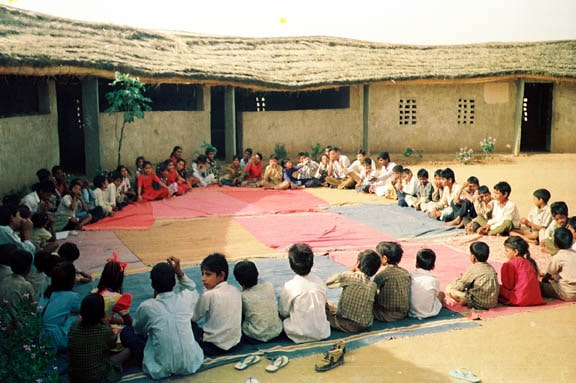
Digantar has its roots in Mr. Horsburgh’s vision, approach, and practice. From its beginnings, Digantar has been committed to providing education of this nature. Self-paced learning without fear or punishment; conceptual learning with clear understanding supported wherever possible by reasoning and practical experience; exploring a broader than usual curriculum including arts and crafts and many activities usually dubbed as extracurricular; growing to become self-motivated and independent in learners – these were the qualities that were considered to constitute good education.

Interaction with other organisations and close contact with local disadvantaged communities in the early years brought a strong commitment to democratic values and Digantar’s emphasis on reason in its emerging and inclusive educational philosophy. With an emphasis on the power of reason in the first teacher’sown study of the philosophy of mathematics and its usefulness established from the outset by the teachers’ training at Neelbagh, a system of principles, pedagogy, and structure of school life emerged over Digantar’s first decade.

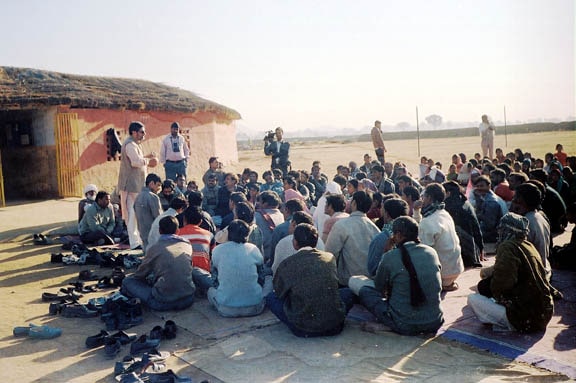
Digantar’s second stage of development effectively started in 1986 when it was decided that the school (now under a registered society named Digantar Shiksha Evam Khelkud Samiti) should be relocated to a permanent home in the rural surrounds of Jaipur to cater to children not attending school and to girlchildren in particular. In time, a three-point agenda emerged. The work of running the school became known as Digantar Vidyalaya. The work of developing appropriate courses, materials, and the training of teachers became The Academic Resource Unit (TARU), enabling Digantar to expand its impact by working with government schools for their pedagogical improvement. Publishing children’s books and teacher guides in Hindi started with the expansion of Digantar’s work with other organisations like Lok Jumbish, URMUL Trust, and Rajiv Gandhi Shiksha Mission Bhopal. A felt need to bring in good theoretical material and educational thought due to involvement in capacity-building programmes at the national level resulted in the publication of Shiksha Vimarsh, a magazine in Hindi. Funds were sought to enable these three activities and they effectively set the parameters for Digantar’s pedagogical objectives through the subsequent three decades until now.
Objectives of Digantar

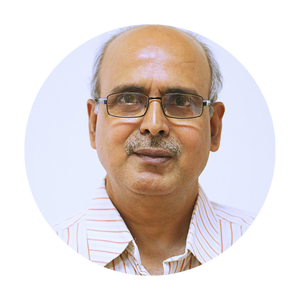
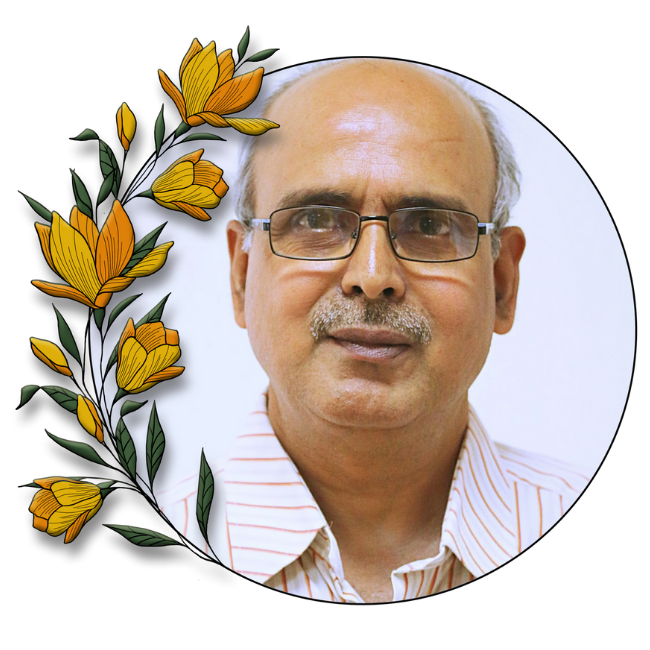
Rajesh Kumar

Director

Founder / Chairman Message

To develop theory and practice capable of providing high-quality education for justice, equality, and freedom, with emphasis on rational autonomy. To reach such education to all, with particular emphasis on the marginalised and those with the least resources.

We are a registered society engaged in running integrated schools, high-quality capacity-building programmes, research, and the development of material for people engaged in education, i.e., children, teachers, teacher educators, and researchers.

Administration

Digantar is a registered society. The General body is the apex decision-making body to formulate the basic policy and rules, make amendments to the constitution, evaluate Samiti’s work, and approve the annual reports and audited accounts for the current year and work plan and budget for the next year. The Executive Committee is responsible for overseeing the functioning of the organization as per the decisions of the General body. Secretary is responsible for executing all the decisions of the Executive Committee, being the Chief Functionary Officer of the Society. Executive Director (ED) is responsible for carrying out the day-to-day administration and execution of activities, with the support of the Chief Accountant and other administrative staff. In this structure, Digantar makes decisions through a democratic process. The Core Group, consisting of the Secretary, ED, and all the Unit heads, meets fortnightly for review and decision-making.

Additionally, the organization has a Programme Coordination Committee, Main Campus Committee, and School Management Committee, each comprising representatives of staff. These committees meet on a periodic basis to discuss relevant matters and coordinate activities within their respective areas of responsibility.

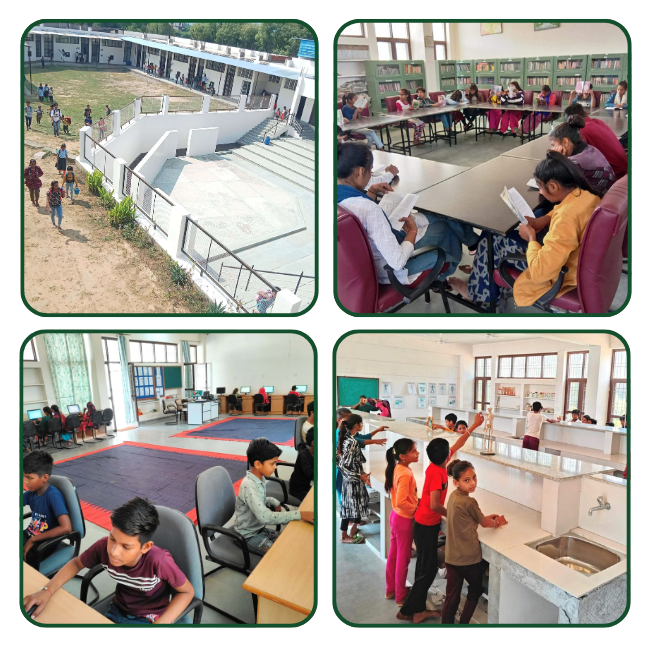
Campus and Infrastructure

Library at Vidyalaya

The Digantar Vidyalaya library has about 27,700 books in four languages and space for 70 readers. Learners visit weekly for reading and borrowing, and a small sub-library operates every Friday with rotating books.

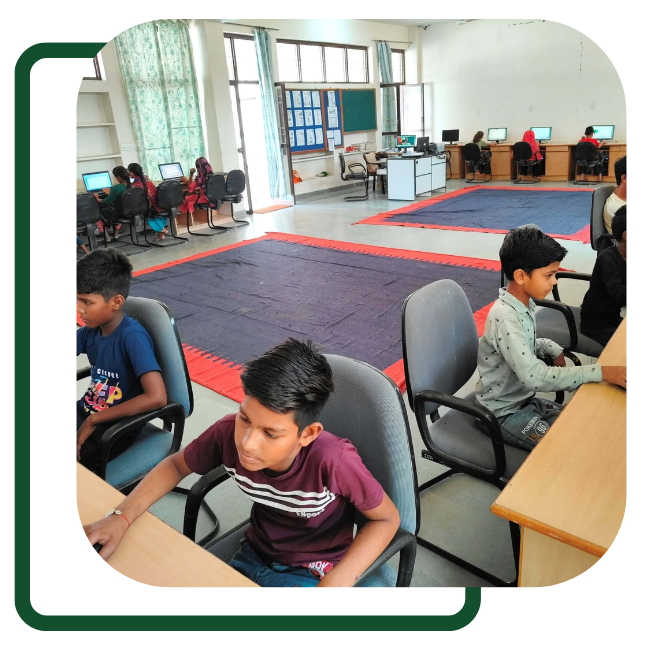
Computer Lab

All students have access to the lab to practice computer applications and explore educational resources, enhancing both teaching and learning

Science Lab

Digantar Vidyalaya has a basic science laboratory for students up to Class 10, equipped for biology, physics, and chemistry.

Scroll to Top